Oct 4, 2026 | News
DOHA, QATAR — Bayanihan Qatar (BQ) has officially proclaimed its newly elected executive officers for the 2026–2027 term following a successful election held on October 2, 2026.
The elections, which commenced at 3:00 PM, were conducted in strict accordance with the organization’s Constitution, By-Laws, and Election Guidelines. Following the close of polls, the Election Committee meticulously tallied, verified, and validated all votes cast to confirm the winners.
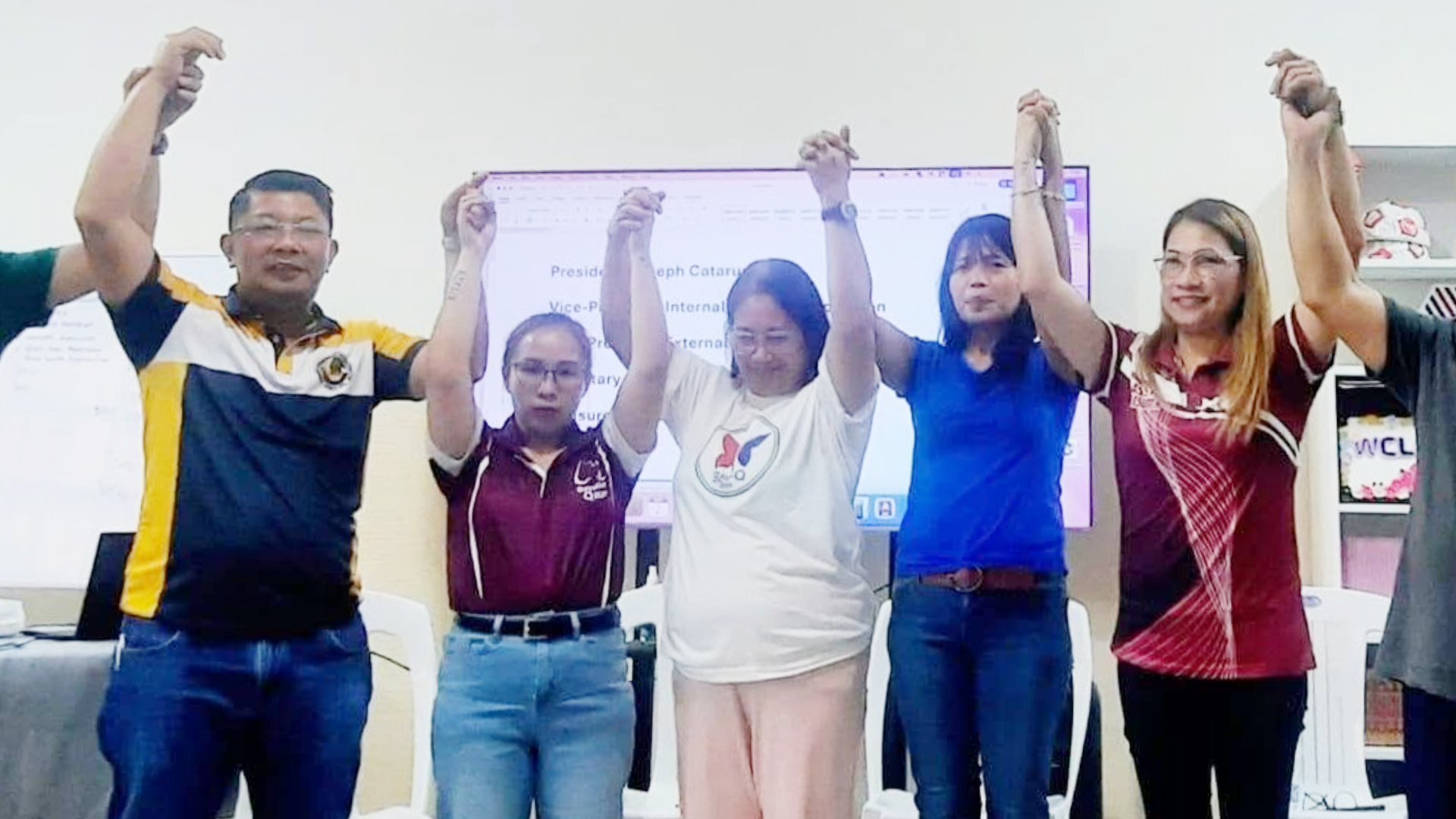
From L-R: Joseph Catarungan (President), Rosario Thomason (Vice-President Internal), Marnie Alvarez (Vice-President External), Thelma Darao (Secretary), and Mitchell Nolasco (Treasurer)
The newly proclaimed executive officers, along with their respective organizational affiliations, are:
- President: Joseph O. Catarungan (BMKQ)
- Vice-President – Internal: Rosario Thomason (BDWQ)
- Vice-President – External: Marnie Alvarez (BUKLOD)
- Secretary: Thelma Darao (QPNA)
- Treasurer: Mitchell Nolasco (OFW International Kasangga)
The proclamation was formally issued and executed in Doha, State of Qatar, on October 2, 2026. The newly elected leaders are set to assume their respective offices in accordance with the organization’s established procedures, ready to guide Bayanihan Qatar through the upcoming term.
Oct 3, 2026 | News
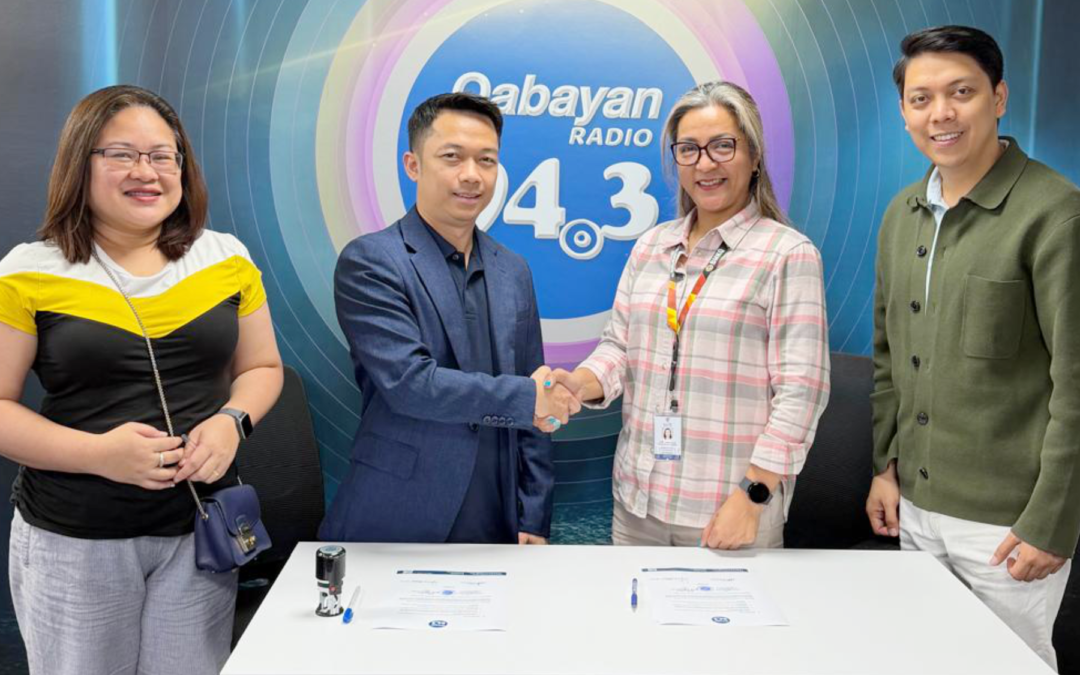
DOHA — In a milestone move to champion community welfare, Qabayan Radio and the Bayanihan ng Manggagawa sa Konstruksiyon ng Qatar (BMKQ) officially signed a Memorandum of Understanding (MoU) today, October 3, 2026, at the Qabayan Radio office in Al Muntazah.
The agreement, set for a one-year term, establishes a strategic framework for collaboration on community-focused programs and mutual initiatives designed to uplift the Filipino community and wider migrant workforce in Qatar.

From L-R: Ms. Rhoselyn Dolloso (BMKQ Secretary), RJ Cody (Station Manager), Ms. Cheryl Marielou C. Valientes (BMKQ Vice-President), and Rj Erick (Qabayan Radio). Photo Credit: Qabayan Radio
The partnership was formally sealed by Qabayan Radio Station Manager RJ Cody and BMKQ Vice-President Cheryl Marielou V. Cayaban, who signed on behalf of BMKQ President Joseph O. Catarungan.
Expanding Community Impact
Under the new MoU, both organizations will pool their resources and reach to execute high-impact programs. The collaboration aims to amplify vital public awareness campaigns, deliver essential educational sessions, and provide robust support systems for expatriates.
BMKQ brings a strong track record of advocacy to the partnership. The organization works closely with Qatari authorities—including the Ministry of Labor and the Workers Support & Insurance Fund (WSIF)—to spearhead multi-national blue-collar migrant worker initiatives such as the following:
-
Heat Stress Awareness Campaigns to protect outdoor workers during peak summer months.
-
Know Your Rights and Obligations educational sessions covering Qatar Labor Law, Residency Law, and regulations concerning domestic workers.
-
Financial Literacy Workshops aimed at promoting long-term economic stability for families.
-
Health and Safety Seminars focused on workplace and personal wellness.
Beyond labor advocacy, BMKQ is widely recognized for its civic engagement and community service. Notably, its officers and members recently played a crucial role in ensuring the success of the Sarah G x Bamboo Live in Doha concert, volunteering their time to manage ticketing and crowd control gates.
With this new alliance, Qabayan Radio and BMKQ look forward to rolling out a series of joint radio show through the Usapang Qabauyan platform, outreach events, and empowerment programs in the coming months, further strengthening the ties within Qatar’s vibrant expatriate community.
Oct 2, 2026 | News
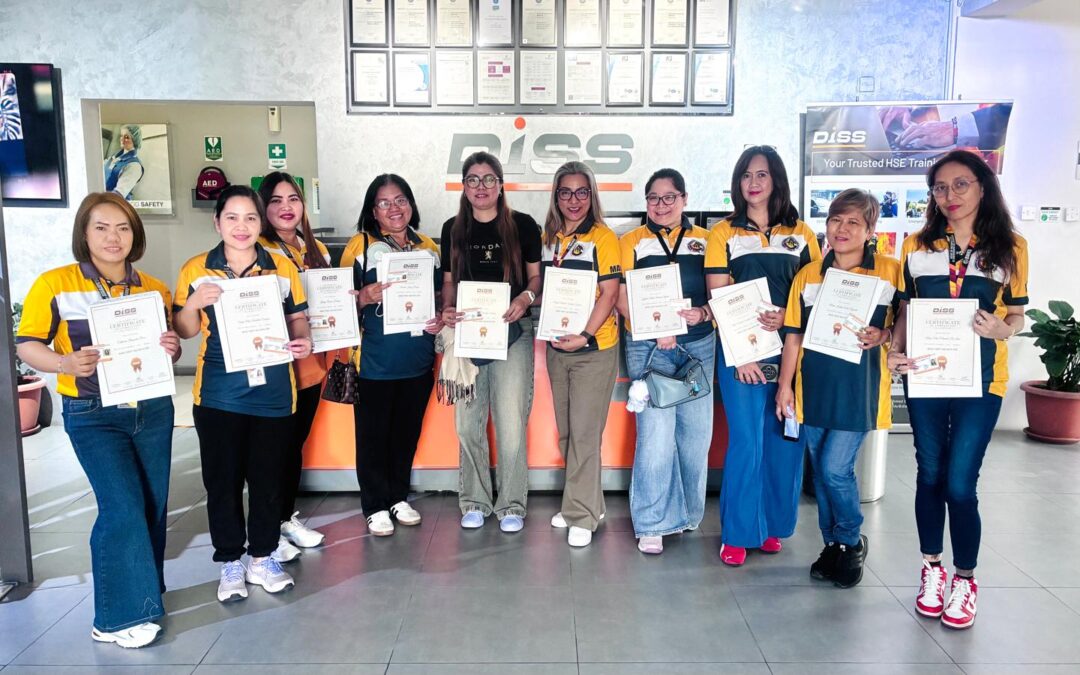
Doha, Qatar – Ten (10) members of the Bayanihan ng Manggagawa sa Konstruksyon ng Qatar (BMKQ) successfully completed and passed a four-hour Basic First Aid with CPR Training conducted at the DISS training center and facilitated by Dr. Raziya S. Nazeer. on 02 October 2026.
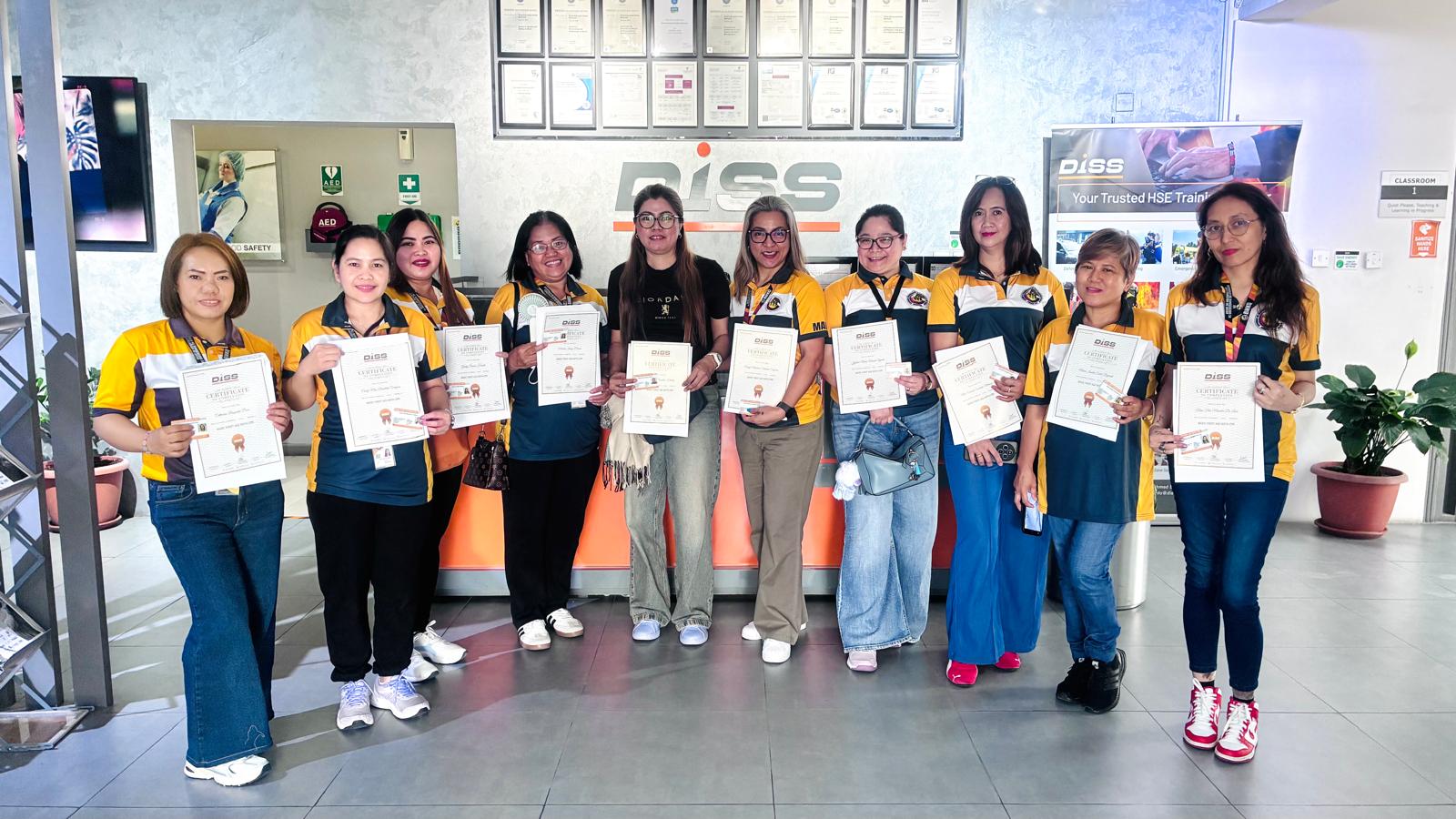
The training equipped participants with essential life-saving knowledge and practical skills to respond effectively during medical emergencies. The course covered five key modules: Introduction to First Aid, Patient Assessment, Cardiac Arrest and Cardiopulmonary Resuscitation (CPR), Recognition and Treatment of Bleeding, Wound Care, and Shock, and Recognition and Treatment of Burns and Heat Stress.
Participants underwent both theoretical and practical assessments to demonstrate their understanding and competency in applying first aid techniques and CPR procedures. All ten BMKQ members successfully met the training requirements and received certification upon completion.
The activity forms part of the continuing partnership between DISS and BMKQ, formalized through a memorandum of understanding signed in December 2025. The partnership aims to strengthen the skills and capacities of Filipino migrant workers in Qatar and support the development of active BMKQ members through relevant training and learning opportunities.
BMKQ expressed its appreciation to DISS and Dr. Nazeer for providing valuable training that enhances members’ preparedness to respond to emergencies and contribute to safe workplaces and communities.
Aug 28, 2026 | News
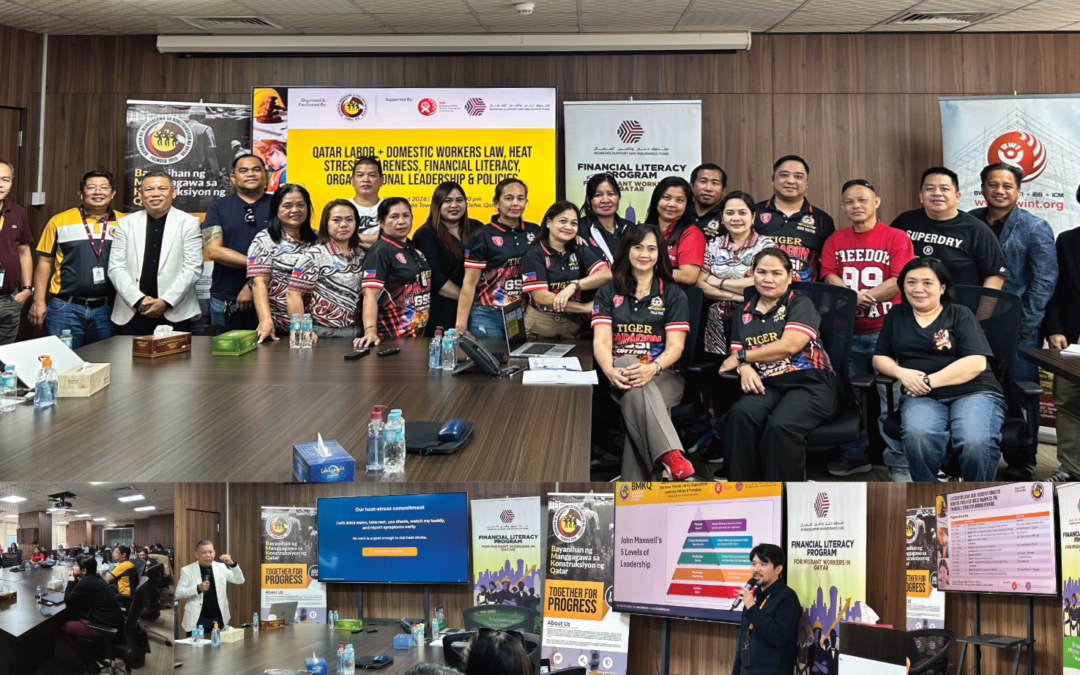
DOHA — Filipino community leaders and migrant workers gathered in Doha on August 28, 2026, for an intensive day-long training program focused on Qatar labor laws, workplace safety, financial literacy, and organizational leadership skills.
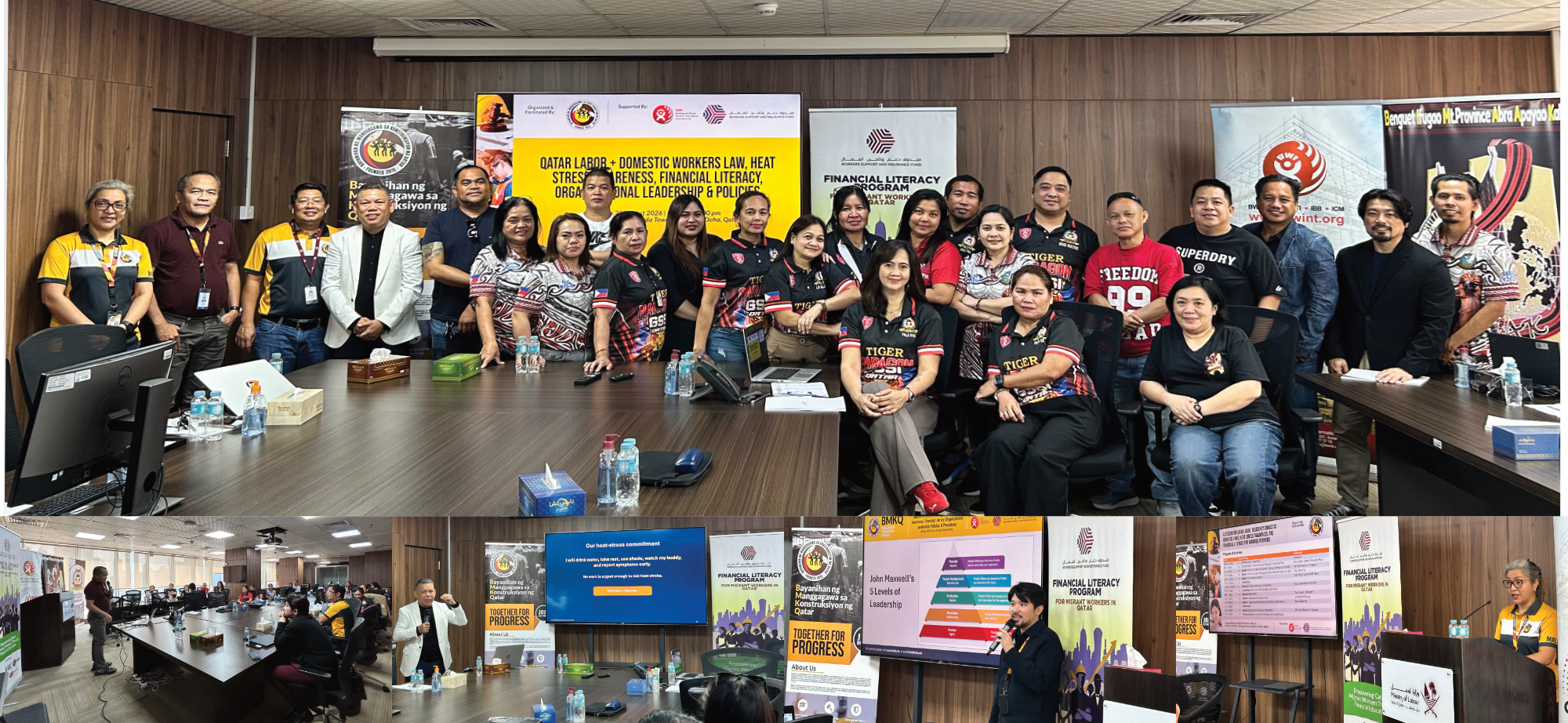
The seminar, held at the Ministry of Labour Office in West Bay, was organized by the Bayanihan ng Manggagawa sa Konstruksyon ng Qatar (BMKQ) with support from the Workers Support and Insurance Fund (WSIF) and Building Wood Workers International (BWI).
The program brought together 28 participants, including leaders and members from various Filipino community organizations representing the construction, domestic work, administrative, and public sectors—specifically from BIMAAK, SEEC, and GSSI.
Empowering Workers Through Rights Awareness
Facilitated by BMKQ alongside the Overseas Filipino Investors and Entrepreneurs Movement (OFIE-M) and the Philippine Association of Safety Engineers (PHASE Qatar), the session aimed to strengthen awareness of migrant workers’ rights and responsibilities. The sessions were led by Engr. Ressie Fos on rights and obligations, Ms. Cheryl Marielou V. Cayaban on the Domestic Workers Law, Engr. Benjun G. Buat on heat stress awareness, Engr. Jason B. Quizon on financial literacy, and Dr. Raymond E. Carasig on organizational leadership skills.
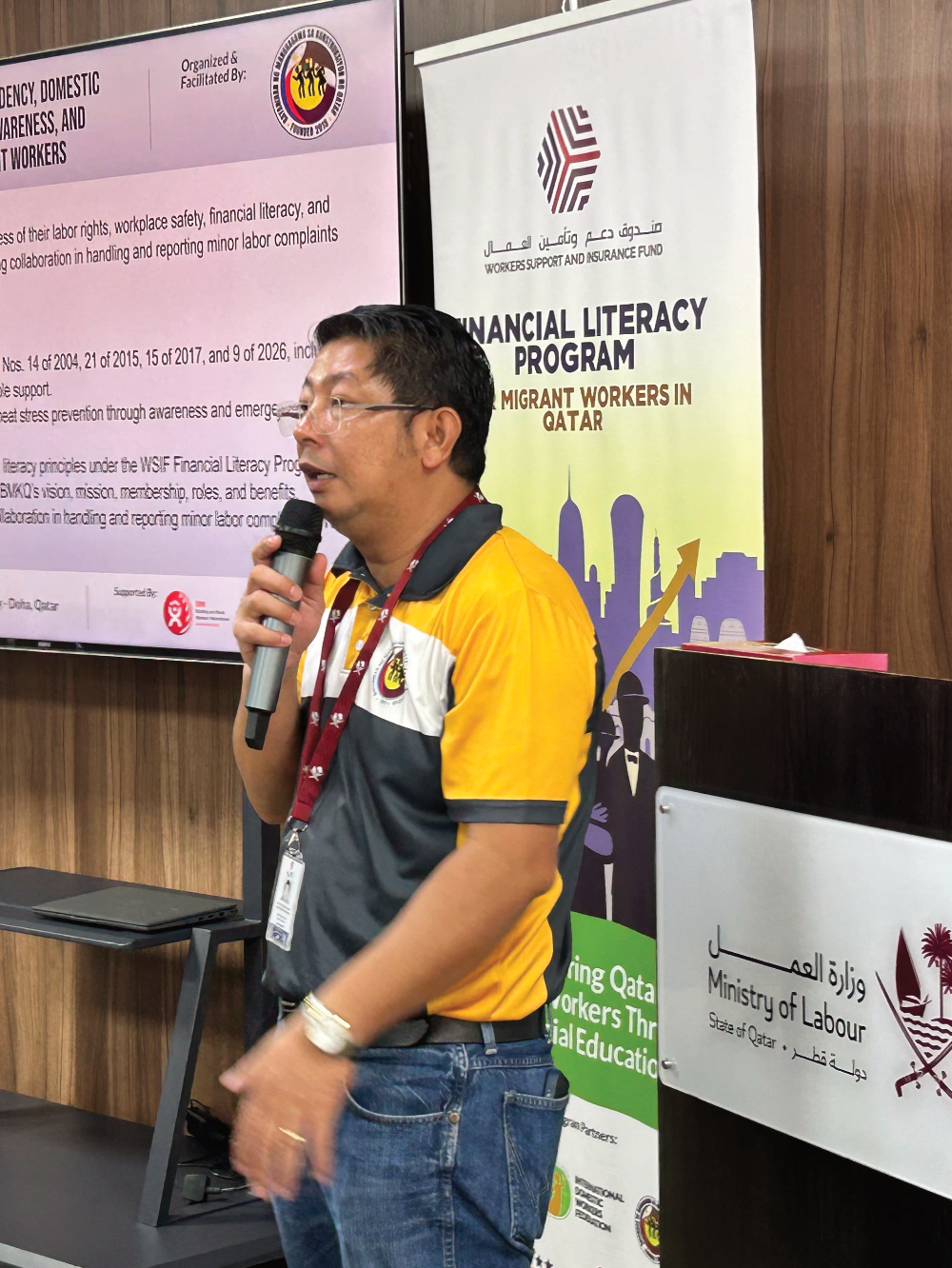
BMKQ President – Mr. Joseph O. Catarungan
Participants received detailed briefings on core Qatari legislation, including Law Nos. 14 of 2004 and 21 of 2015, alongside regulations covering domestic workers and recent legal updates. Resource speakers also addressed heat stress prevention, emergency response guidelines, and workplace safety protocols.
Strong Focus on Financial Literacy
Financial literacy emerged as a standout component of the workshop, drawing high engagement and overwhelmingly positive feedback from attendees. Delivered under the WSIF Financial Literacy Program, the sessions introduced foundational savings and financial planning principles, which participants identified as critical for long-term stability.
Evaluation results underscored the success of the initiative. Out of the participants who completed feedback forms, 100% rated the overall satisfaction as either “Excellent” or “Very Good,” with nearly 90% expressing high confidence in applying their new knowledge.
Closing the event, BMKQ President Joseph O. Catarungan emphasized the organization’s ongoing commitment to partnering with Qatari authorities and community organizations to champion migrant worker welfare and capacity-building initiatives in the country.
Additional support was provided by Ms. Angel ‘Mavs’ Ardeza as documentation officer, alongside Ms. Vicky Musngi and Ms. Rhea Flor de Leon, who served as the secretariat.
Aug 14, 2026 | News
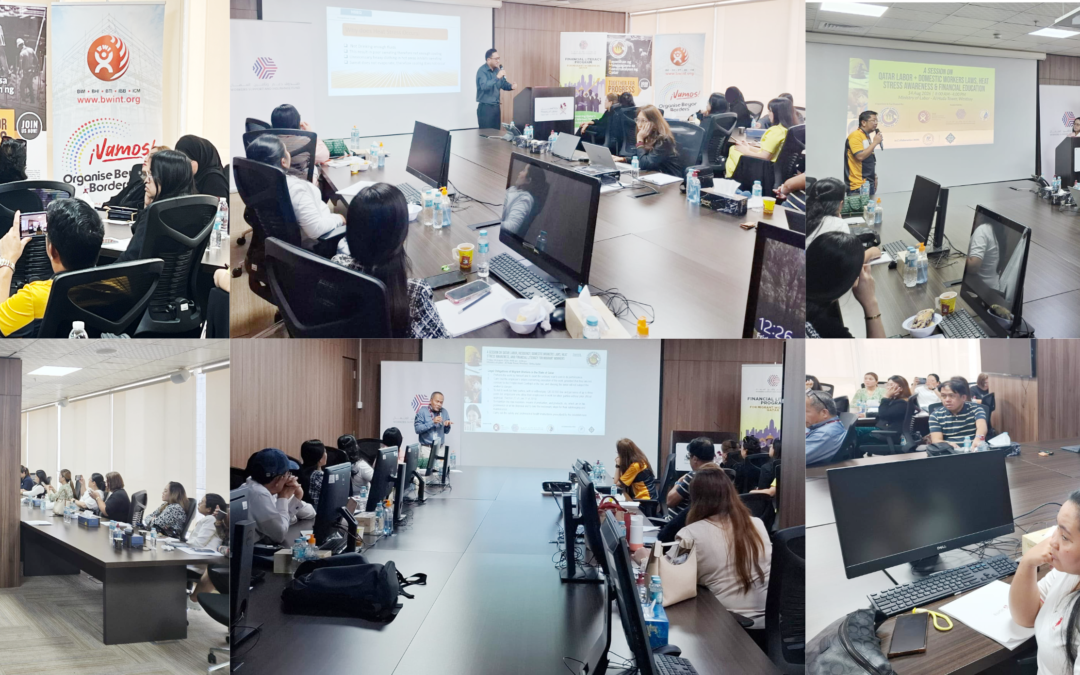
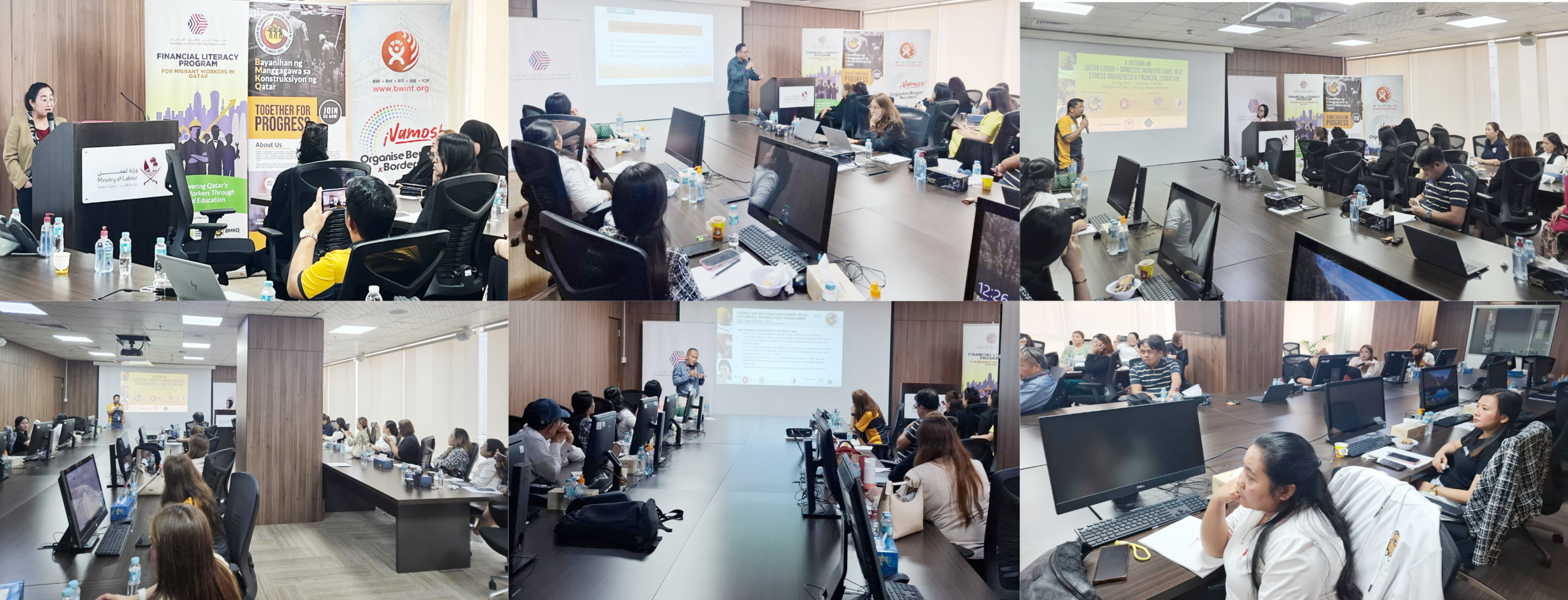
DOHA, Qatar — In a robust display of community collaboration and advocacy, Filipino community organizations, government agencies, and migrant support groups gathered on August 14, 2026, for a comprehensive workshop titled “Workers’ Rights and Wellbeing Awareness: Labor Law, Heat Stress, and Financial Literacy.”
Held at the Ministry of Labor Meeting Hall on the 15th floor of Al Huda Tower, the full-day seminar drew leaders, agency representatives, and advocates committed to championing the welfare of overseas Filipino workers (OFWs) in Qatar.
A Collaborative Mission for Worker Welfare
The high-impact event was organized through a powerful partnership between the Bayanihan ng Manggagawa sa Konstruksiyon ng Qatar (BMKQ), the Workers Support and Insurance Fund (WSIF), and Building and Wood Workers International (BWI).
Resource speakers and facilitators brought cross-sector expertise to the table, featuring representatives from the Overseas Filipino Investors and Entrepreneurs Movement (OFIE-M) for financial literacy, the Philippine Association of Safety Engineers (PHASE Qatar) for workplace and heat stress awareness, and the Philippine Migrant Workers Office (MWO) addressing domestic workers’ laws.
The workshop successfully targeted officers and members of Filipino Association of Manpower Services Qatar (FAMS), an association representing manpower recruitment service providers for domestic workers. Because these agencies serve as the primary bridge throughout recruitment, deployment, and monitoring, equipping them with deep legal and wellness insights directly protects some of the most vulnerable members of the migrant workforce.
Comprehensive Modules and Practical Insights
The curriculum spanned six intensive modules, covering critical areas designed to safeguard workers and secure their futures:
- Legal Empowerment: Participants deep-dived into Qatari legislation—including Law Nos. 14 of 2004, 21 of 2015, 15 of 2017, and the newly enacted Law No. 9 of 2026—clarifying residency rules, labor rights, domestic worker protections, and official complaint mechanisms.
- Health and Safety: PHASE Qatar led critical sessions on recognizing early warning signs of heat stress, executing proper emergency responses, and implementing practical workplace safety protocols.
- Financial Resilience: Under the WSIF Financial Literacy Program, OFIE-M introduced fundamental tools for income management, expense tracking, savings, and long-term financial planning.
- Community and Support: BMKQ outlined its vision and mission, while discussions focused heavily on strengthening multi-agency coordination to effectively handle and report minor labor disputes.
Unanimous Acclaim and Future Partnerships
Participant evaluations reflected overwhelming success. Every attendee who completed the feedback form rated the training modules, facilitation, materials, and overall organization as “Excellent.” Furthermore, 100% of participants indicated they would recommend the program to other workers, highlighting its high practical value and potential for peer-to-peer outreach.
Looking ahead, BMKQ leadership expressed deep appreciation for the collective effort alongside WSIF and the Ministry of Labour.
“United by shared values and common aspirations, we embrace this collaboration as a testament to collective purpose,” shared Mr. Joseph O. Catarungan, President of BMKQ. He added that future initiatives with the FAMS will focus heavily on rolling out Post-Arrival Orientation Seminars (PAOS) to guide newly arrived domestic workers through local guidelines and government support services.
As partnerships expand, this seminar sets a high benchmark for worker advocacy, proving that cooperative education is a vital pillar for a safer, more secure migrant workforce in Qatar.
Jul 31, 2026 | News
For many migrant workers leaving home for the Gulf, the dream is simple: save money, support family back home, and eventually return to build a better life. But navigating living costs, remittance demands, and high-risk financial traps along the way is rarely easy.
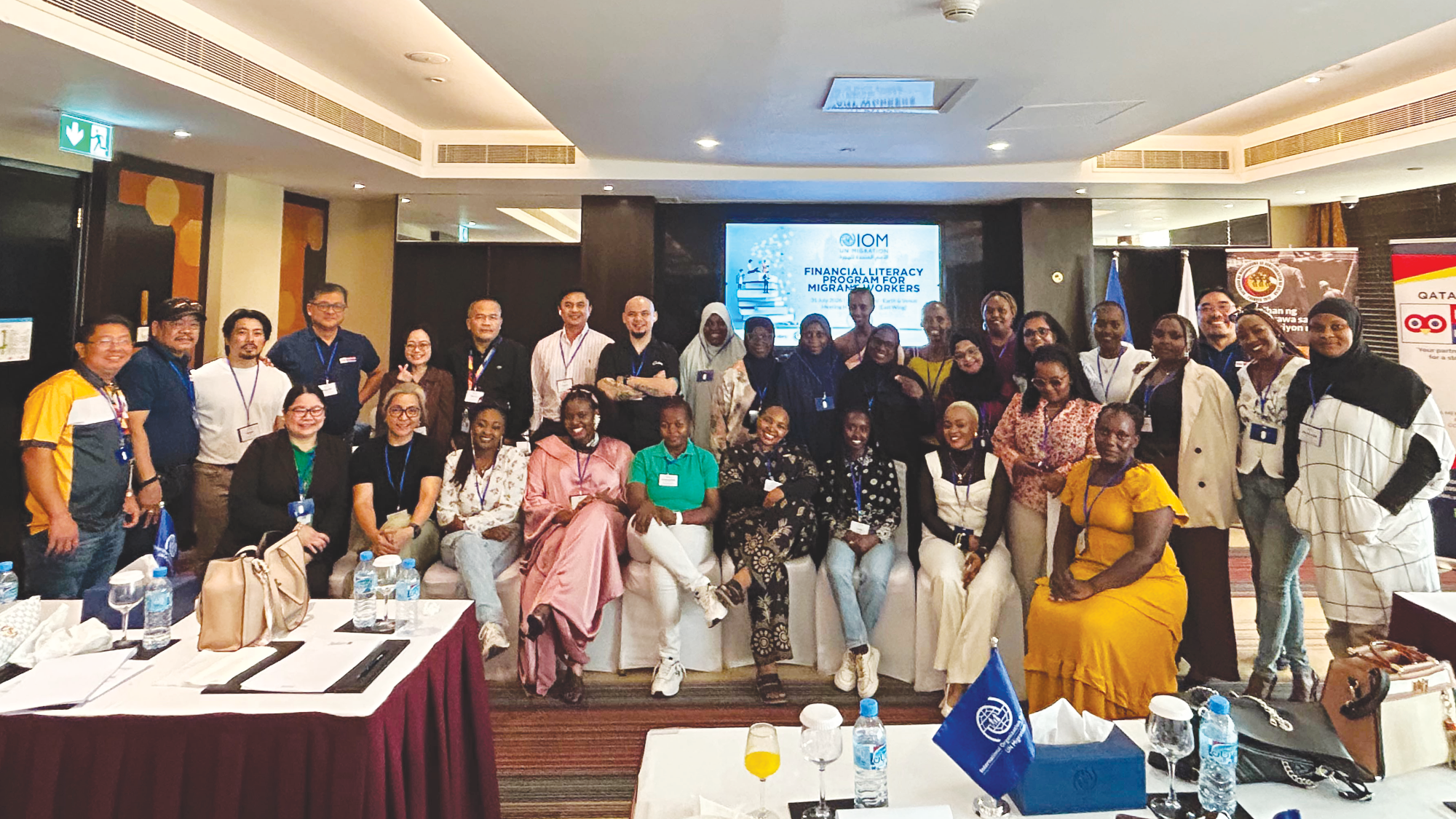
Photo by: Mavs Ardeza
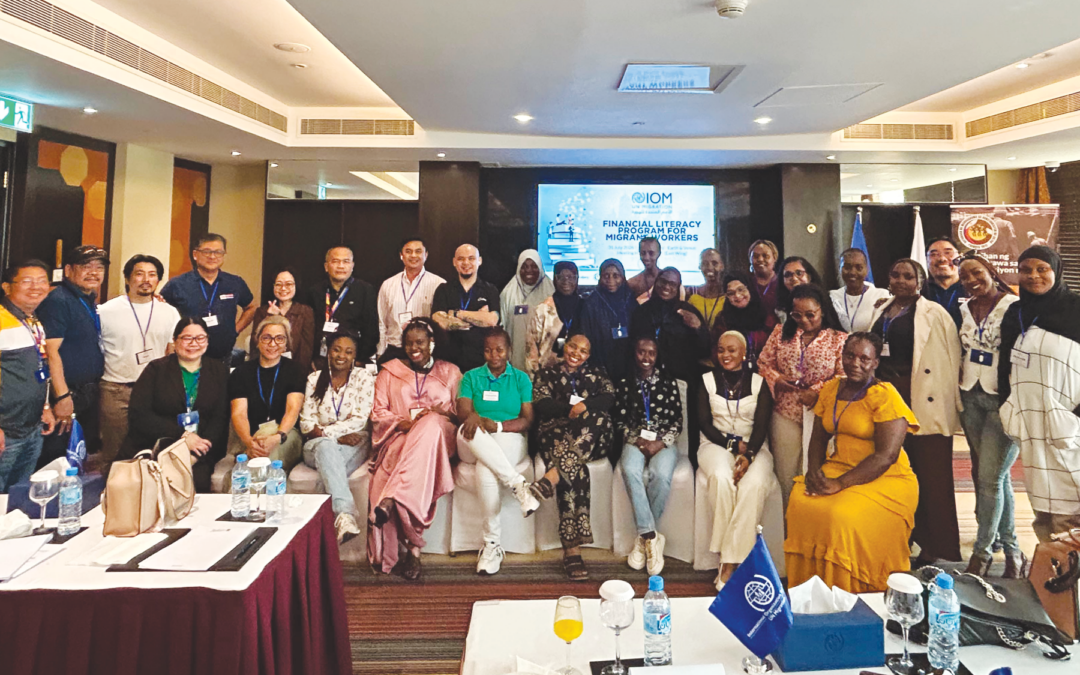
To help bridge that gap, dozens of foreign workers gathered at the Radisson Blu Doha on July 31 for an interactive, full-day financial workshop organized by the UN’s International Organization for Migration (IOM) Qatar Office.
The venue was filled with a diverse cross-section of Qatar’s workforce—from healthcare staff and hospitality workers to security guards, teachers, and domestic workers. Attendees travelled from across the globe, originating from India, Kenya, Nigeria, the Philippines, and Uganda.
“I don’t need to wait to start saving—it should start now,” reflected one participant during the interactive exercises, capturing the general mood of the room.
The workshop was facilitated by community groups including the Bayanihan ng Manggagawa sa Konstruksiyon ng Qatar (BMKQ), the Overseas Filipino Investors and Entrepreneurs Movement (OFIE-M), and PinoyWISE International Qatar.
Steering clear of dry financial theory, the training grounded itself in practical, real-world advice. Facilitator Engr. Ressie Fos urged participants to reconnect with their original motivation for working in Qatar, reminding them that their families’ dreams should serve as their guiding light. To stay on track, he emphasized smart financial management—specifically distinguishing needs from wants to cut daily expenses and boost intentional monthly savings. To drive the point home, he illustrated how disciplined budgeting directly impacts the timeline required to fund and build a dream home back home.
Subsequent sessions turned money management into a simple habit. Presenter Engr. Jason Quizon challenged traditional spending order by introducing a savings-first formula: setting aside personal savings and remittances before calculating daily living expenses.
Meanwhile, trainers Edgardo Alcantara and Aris Riparip tackled debt traps, credit card pitfalls, and goal-setting—capping the day off with a “seven-day action challenge” to encourage participants to take their first real financial step within a week.
The approach appeared to resonate. In post-workshop surveys, 93.3 percent of evaluated participants strongly agreed that the day helped them better understand budgeting, remittance planning, and smart spending.
While organizers noted minor hiccups—such as managing participant punctuality and a long walk to the lunch venue—the overall sentiment was overwhelmingly positive.
For community groups like BMKQ, the event highlighted the power of practical education.
“United by shared values and common aspirations, we embrace this collaboration,” the group said, adding that empowering workers with financial independence remains a vital, ongoing mission in Qatar.